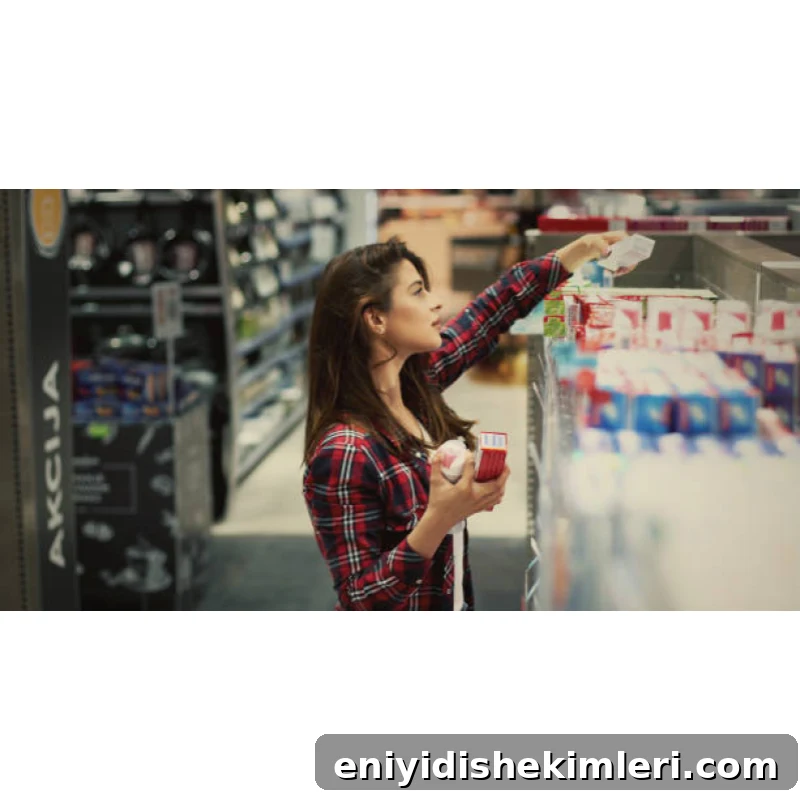
I was in Los Angeles last week visiting one of my daughters, and she took me to Erewhon. (Happily, for the record.)
If you’ve never been, Erewhon is the grocery store where a smoothie can cost $22 and the parking lot looks like a Tesla showroom. When in Rome, right?
Naturally I found myself in the toothpaste aisle—and what I saw was striking. Nano-hydroxyapatite was everywhere. Brand after brand prominently featured nHAP, the calcium mineral that makes up about 97% of tooth enamel.
A decade ago this ingredient was mostly available in Japan. Now it dominates the toothpaste section at one of LA’s most talked-about stores. That’s genuine progress.
For years I told patients that most toothpastes were compromises. Boka was once the best option available—I’d recommended them—because they got nHAP into consumers’ hands when few others did.
A woman beside me picked up a tube of Boka and asked, “Do you know anything about these?” I told her I might know a thing or two, and we started talking. She’d heard of nHAP on a podcast and was choosing toothpaste based on that single ingredient, without carefully reading the rest of the label.
I flipped the tube over. The ingredient list included multiple essential oils: peppermint, spearmint, wintergreen, anise, cardamom oil, and menthol—seven components with broad-spectrum antimicrobial activity. They all do the same thing: kill bacteria.
I also spotted sodium lauroyl sarcosinate. The front of the tube boasts “SLS Free,” but the brand had simply swapped SLS for a surfactant cousin. Different chemical name, same category: a foaming, cell-stripping surfactant. It’s a milder alternative, but it’s still a surfactant. “SLS Free” has become a marketing phrase; it does not mean surfactant-free.
She asked, “Aren’t essential oils natural?” Natural, yes. Microbiome-destructive, often yes. Concentrated plant extracts behave differently than plant matter chewed in small amounts. Tea tree oil in a bottle is the distilled essence of pounds of leaves; at that concentration a plant compound can act like a drug rather than a food.
I checked more tubes on the shelf. The pattern repeated: essential oils in nearly every product, sometimes four or more; one formula listed nine, including tea tree oil, one of nature’s most potent broad-spectrum antimicrobials. These smaller brands deserve credit for bringing nHAP to market, but many loaded their formulas with ingredients that don’t discriminate between harmful and beneficial bacteria.
Here’s what I believe is happening: toothpaste is regulated as a cosmetic in the U.S., so brands borrow from the skincare playbook—chamomile, lavender, exotic botanicals—to signal sophistication and justify premium pricing. It’s cosmetic mimicry. Having chamomile in toothpaste isn’t the upgrade the label implies.
What I told her:
There is no effective remineralization without a healthy oral microbiome. Your teeth rely on oral bacteria to support repair. Damage the microbiome and remineralization slows or stops.
Commensal bacteria—species such as S. sanguinis, S. salivarius, and S. oralis—play multiple roles: they participate in saliva chemistry that helps calcium and phosphate redeposit on enamel, produce nitric oxide that supports cardiovascular health, and contribute to communication along the oral-gut-brain axis. They also help control bad breath.
When toothpaste wipes these bacteria out, the risk extends beyond cavities. You’re disrupting organisms that contribute to broader health.
Put another way: it’s like watering a garden while pouring salt on the soil.
A 2021 study in Antibiotics tested essential oils such as thyme and oregano against cavity-causing species like Streptococcus mutans and beneficial commensals like Streptococcus sanguinis. The essential oils killed both, and the authors warned that effects on commensals “can raise concerns,” because removing them can create imbalances that lead to infection or oral disease.
I don’t blame companies for using essential oils—they taste pleasant and give toothpaste a tingly, clean sensation. For years we didn’t understand the oral microbiome well enough to see this as a problem. Today, however, that understanding has changed how we should evaluate formulations.
My aisle companion then asked, “So I need nHAP without essential oils. But isn’t 10% the concentration to look for—doesn’t more mean better?”
That’s a good question. The common 10% benchmark traces back to a 2009 study from China, but the particles they used were 500 to 2,000 nanometers—by modern standards those are micro-particles, not true nano. Larger particles require higher concentrations to work. Engineered, finer nano-particles that better match enamel defects can be effective at much lower percentages.
Efficacy is only one part of the equation. A toothpaste ingredient doesn’t stay confined to teeth. It contacts gums, is absorbed by oral tissues, can be swallowed, and may reach the gut. So the right questions are: does it rebuild enamel, and is it safe for the whole body?
That’s where the SCCS—the European Scientific Committee on Consumer Safety—matters. The SCCS evaluates ingredients in personal care products, reviewing cell-level effects, inflammation, absorption, potential blood or organ accumulation, and other safety data. Their formal opinions guide EU policy.
In June 2025 the SCCS published a detailed opinion on nano-hydroxyapatite. They specified particle shape and size: rod-shaped, uncoated, with certain aspect ratios, and explicitly warned against needle-shaped particles as potentially harmful. Their conclusion was clear: for the specific particle profile they reviewed, uptake by buccal mucosa is negligible and any epithelial cells that internalize particles are shed naturally—meaning those particular particles do not appear to accumulate in the body.
That opinion applies only to the precise form of nano-HAP they evaluated. The nano-HAP used in Fygg is nanoXIM from Fluidinova: rod-shaped particles roughly 30 nm long and 15 nm wide, uncoated and unmodified—matching the SCCS specifications for safety.
The research we invested in
Full disclosure: I’m a Fygg co-founder. From day one I insisted we fund independent research—not to cherry-pick results, but to find out the truth. Any brand asking for consumer trust should be willing to have its formula evaluated publicly.
Fygg funded a peer-reviewed study at Dr. Bennett Amaechi’s lab at UT Health San Antonio, a leading center for remineralization research. The study compared our formula against other major nano-HAP toothpastes and against fluoride formulations in direct remineralization tests.
All products in the study produced significant remineralization, consistent with evidence that both nHAP and fluoride can rebuild enamel. Fygg performed comparably to prescription-strength fluoride (ClinPro 5000) and standard fluoride (Crest).
Notably, Fygg and Boka both use nanoXIM, yet Fygg significantly outperformed Boka. When two products contain the same active ingredient, such a performance gap points to differences elsewhere in the formulas. The toothpastes loaded with essential oils, surfactants, and botanicals tended to perform worse. The formula that avoided those disruptive additives—the one designed to respect the oral microbiome—performed nearly twice as well in vitro. While an in vitro study cannot pinpoint the exact mechanism, the takeaway is clear: certain ancillary ingredients can interfere with remineralization.
What I told her to look for
She was right to shop in that aisle. Before she bought anything, I gave her three practical checks:
1. Count essential oils and botanicals. Tea tree, eucalyptus, thyme, wintergreen, peppermint, spearmint, and anise are broad-spectrum antimicrobials that kill both harmful and beneficial bacteria. Fruit and flower extracts—chamomile, aloe, mango—are cosmetic mimicry and possible oral microbiome disruptors.
2. Look for SCCS-grade nanoXIM—not just the label “nHAP.” Grade and particle specifications matter more than percentage. A label that simply says “nHAP” provides no assurance about the particle form or whether it has been evaluated for whole-body safety.
3. Read past “SLS Free.” Ingredients like sodium lauroyl sarcosinate or cocamidopropyl betaine are surfactant cousins of SLS. They perform similar functions and can have similar effects on oral tissues. “SLS Free” is not the same as surfactant-free.
This is why I helped start Fygg: to create a formula that treats the oral microbiome as a partner in remineralization rather than collateral damage, and to back that formulation with independent research.
I hope this was helpful. If you have questions or suggestions for future topics, reply and let me know.
Keep reading those labels,
Mark

P.S. If you’ve already switched to nHAP, good for you—you’re ahead of most people. Now turn the tube over and read the full ingredient list. That’s where important differences hide.
Further Reading & Citations
Aires, A., Barreto, A.S., & Semedo-Lemsaddek, T. (2021). “Antimicrobial Effects of Essential Oils on Oral Microbiota Biofilms: The Toothbrush In Vitro Model.” Antibiotics, 10(1), 21.
Amaechi, B.T., Tan, A.I., Noureldin, A.A.K., Kanthaiah, K., Holladay, E., Obiefuna, A.C., & Vijayaraghavan, M. (2025). “In vitro evaluation of the ability of nanohydroxyapatite toothpastes to enhance remineralization of enamel caries lesion.” Journal of Dentistry, 161, 106006.