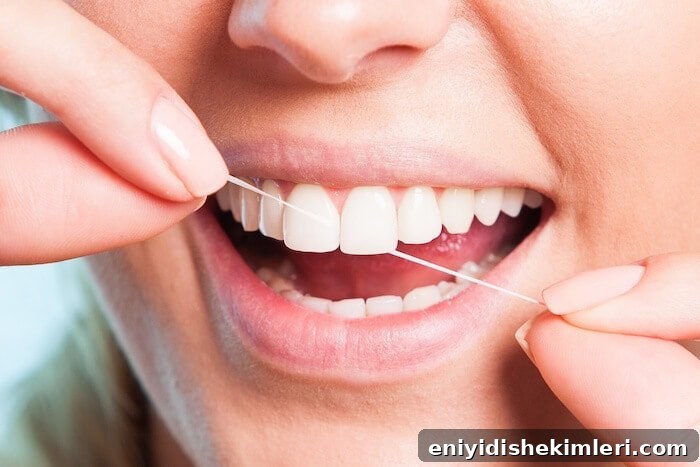
Why is it so hard to remember to floss? Most people can remember to brush twice a day, but flossing often gets overlooked. Patients regularly arrive at hygiene appointments dreading the reminder from their hygienist about flossing — and there’s a psychological reason for it.
Flossing can feel awkward or unpleasant. The motion and sensation are unfamiliar and somewhat intrusive. Unlike brushing, which can provide an immediate, noticeable clean, flossing usually delivers benefits that are delayed and less obvious. That lack of immediate reward makes it harder for the brain to form a habit.
Understanding how habits form helps explain why brushing became automatic for many people while flossing did not. In the early 1900s, dental hygiene was poor enough to be considered a serious public health concern. Around that time, sugar-laden processed foods like crackers and chips became common in the American diet, increasing decay and shifting public awareness.
A major toothpaste campaign changed behavior by teaching people to run their tongue over their teeth and feel for a “film” that made teeth look dingy. The ad promised a clean, fresh sensation once that film was removed. That simple cue (running your tongue across your teeth) plus a clearly defined reward (the fresh, clean feeling) created a craving that turned brushing into a habit.
As Charles Duhigg describes in The Power of Habit, habits form when three elements come together: a cue, a routine, and a reward. Successful campaigns and routines make the cue obvious and the reward immediate.
Flossing lacks that instant gratification. The benefits — less decay, healthier gums, reduced risk of tooth loss, and fewer costly dental procedures — play out over months and years. Our brains are wired to respond to immediate rewards, not distant benefits, which is why flossing doesn’t become automatic for many people.
To make flossing a habit, give your brain what it needs: a simple, obvious cue and a clearly defined reward. Choose a consistent time, like every night before bed, and pick a small reward that makes the habit more appealing. For children, a sticker chart by the sink can create a tangible reward that reinforces the behavior.
Create a cue. One simple technique is to place a blank Post-it note on your bathroom mirror. Don’t write an order such as “floss” on it — that can feel too harsh. Instead, let the presence of the Post-it itself become a quiet reminder. Over time, seeing it will prompt you to floss without a conscious push.
Make it easy. Keep floss accessible in multiple locations so you’ll be more likely to use it when the urge hits. Small samples from the dentist are ideal for stashing in a desk drawer, gym bag, car, laptop bag, and travel toiletry kit. If floss is handy during the day, you’re more likely to act on the brief craving for that clean feeling.
Consider using a floss pick or a flossing handle. These tools make flossing a one-handed motion and reduce the awkwardness for many people. They’re especially useful for multitaskers who want to floss while doing something else, like checking their phone or watching TV.
Reduce the pressure. Don’t set an all-or-nothing goal such as “floss every day” if that feels overwhelming at first. Start smaller. I suggest patients begin by flossing once a week. That first time often produces a noticeable sensation — the teeth feel separated, and the gums get a light stimulation that can feel like a small massage. That positive sensation creates a craving to repeat the action.
Once you experience flossing and its immediate sensory reward, you’ll often find yourself doing it more frequently. Gradually increase from once a week to a few times a week, then to nightly. Small, achievable steps build confidence and consistency.
Think of flossing like keeping an anthill at bay. Kicking an anthill once will remove it temporarily, but if you don’t keep at it, the ants rebuild. Similarly, flossing only in the days immediately before a dental appointment isn’t enough to prevent gum disease, decay, and recession. Consistent daily flossing maintains the health you want.
With a clear cue, an easy routine, and a small reward, flossing can become an effortless part of your daily routine — something your brain performs on autopilot. Start small, make it convenient, and let the small sensory rewards reinforce the habit over time.
Mark Burhenne DDS
For further reading, Charles Duhigg’s The Power of Habit provides an excellent look at how habits are formed and how to change them.
Learn More:Hospitals Are Fighting Pneumonia With Brushing and Flossing (And Winning)