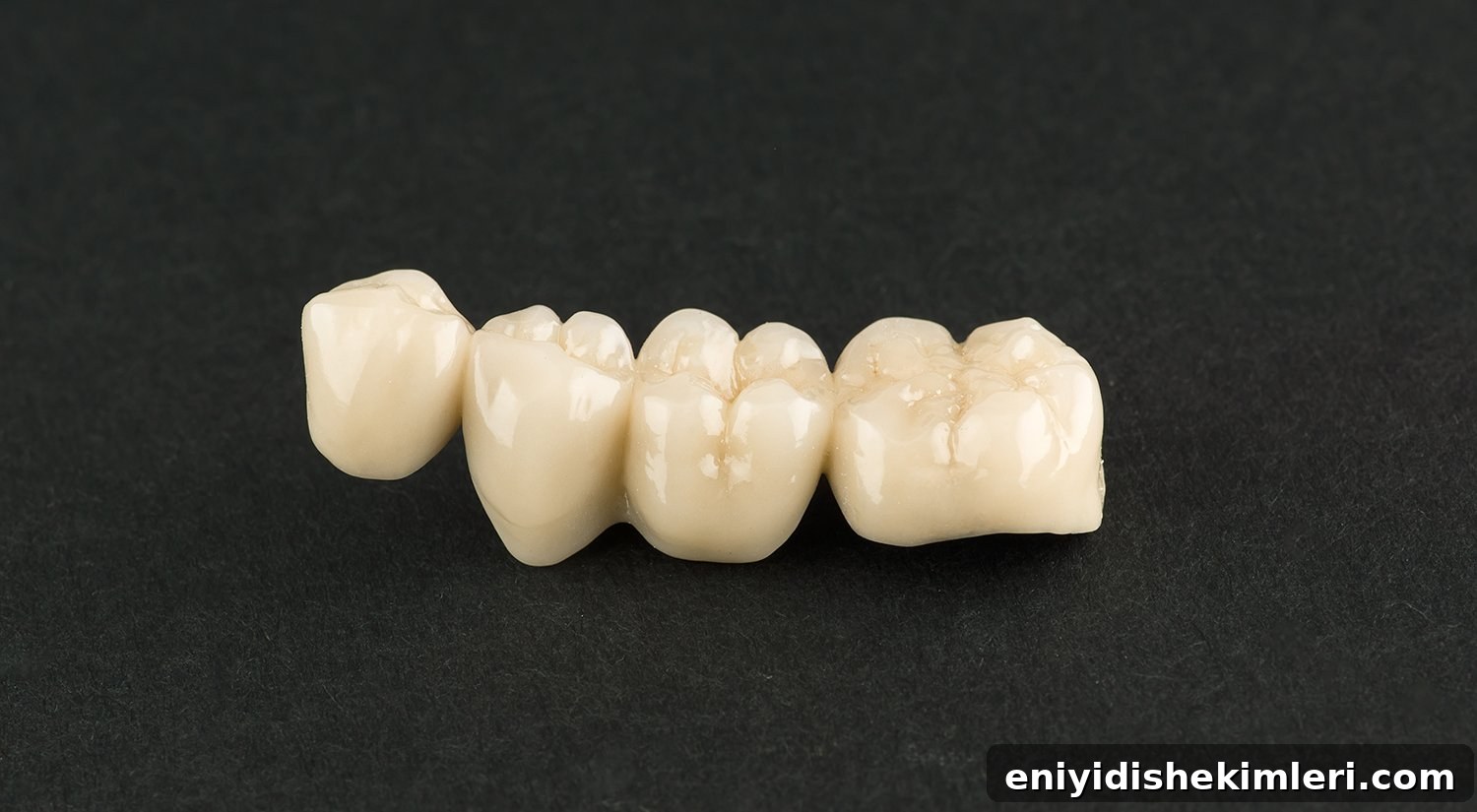
Although there is social stigma around missing teeth, many people experience tooth loss: studies show a large percentage of adults have lost at least one tooth by midlife. Tooth loss can result from failed root canals, accidents, gum disease, or decay, and replacing missing teeth is important for chewing, speech, and self-confidence.
Dental bridges are a common way to restore missing teeth. Below we explain what a dental bridge is, the main types, typical costs, when they are appropriate, and alternative treatments to consider.
What is a dental bridge?
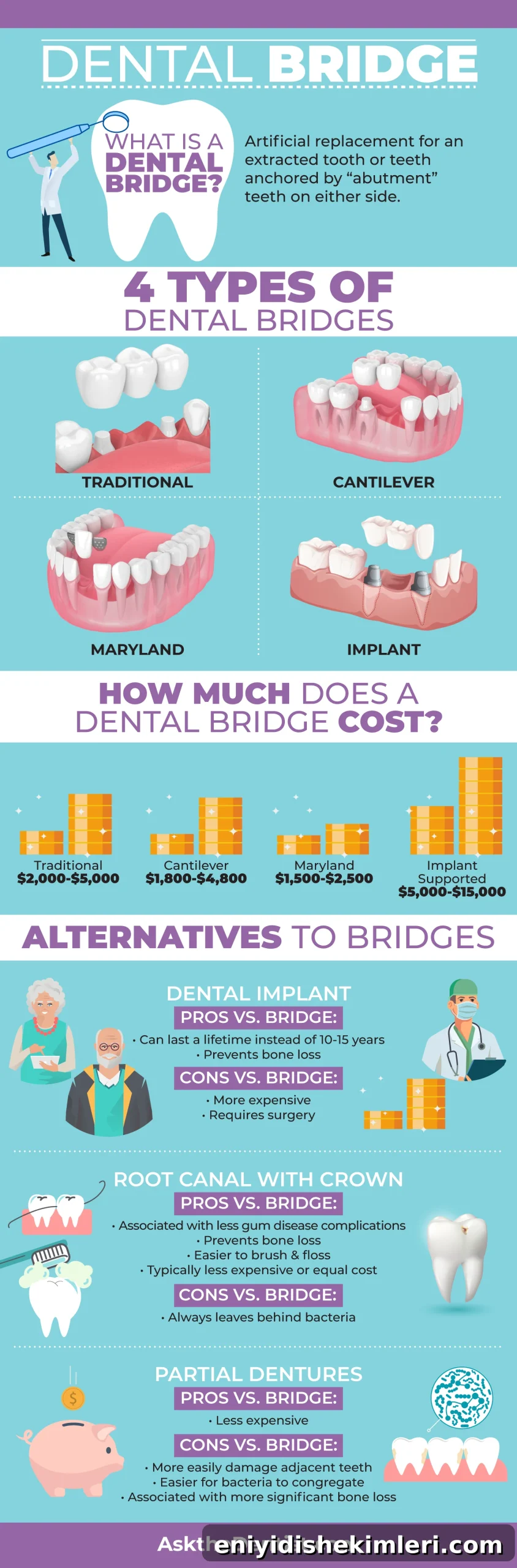
A dental bridge is a fixed dental restoration that fills the gap left by one or more missing teeth by anchoring an artificial tooth (pontic) to the adjacent natural teeth or implants. The teeth that support the bridge are called abutment teeth. Bridges can be made from a range of materials, including high-quality ceramics such as porcelain or zirconia, metal alloys, or a combination of materials. The choice of material depends on cost, durability, and the location of the bridge in the mouth.
The pontic is secured by the abutment teeth or implants to provide a stable chewing surface and a natural appearance.
What does a dental bridge look like?
The appearance varies with the type of bridge and the chosen materials, but modern materials and techniques produce results that closely match natural teeth. Bridges can be color-matched and shaped to blend with surrounding teeth, making them hard to distinguish from natural dentition.
Every type of bridge is anchored differently, so the exact look and structure depend on whether crowns, wings, implants, or a framework are used.
Use cases: When to get a dental bridge
Dental bridges are suitable whenever there is a gap from one or more missing teeth and the adjacent teeth or jaw support are adequate. Common reasons to replace a tooth include decay that required extraction, traumatic injury, or damage caused by periodontal disease.
Leaving a gap can allow nearby teeth to shift, alter your bite, and eventually change facial appearance; replacing the missing tooth helps prevent these issues.
Dental implants are often considered the gold standard for single-tooth replacement, but they are more expensive and require sufficient jawbone and surgery. Bridges can be a strong, less invasive alternative, especially for younger patients whose jaws are still growing or for patients who prefer to avoid implant surgery.
A bridge is only an option when the adjacent teeth are healthy enough to support the restoration.
4 types of dental bridges
Understanding the main types of bridges helps you evaluate options with your dentist and decide which approach best fits your needs.
1. Traditional bridge
A traditional bridge uses crowns placed on the teeth on either side of the gap to support one or more pontics. This is a strong, widely used design suitable even for replacing molars. A drawback is that the supporting teeth must be prepared by removing some enamel to fit crowns. Because enamel does not grow back, choosing a traditional bridge is a long-term decision: the abutment teeth will require crowns permanently.
2. Cantilever bridge
Cantilever bridges support the pontic from only one side of the gap. They are used when a tooth is missing adjacent to only one healthy tooth, but they are less stable than traditional bridges and can place additional stress on the supporting tooth, potentially causing problems over time.
3. Maryland bridge
The Maryland bridge is a conservative option that uses a metal or porcelain framework with wings bonded to the backs of the adjacent teeth. It is often used as a temporary or interim solution for younger patients whose jaws are still developing. Because it typically requires less tooth preparation, the Maryland design preserves more natural tooth structure, but it may be replaced later with a more durable restoration.
4. Implant-supported bridge
An implant-supported bridge is anchored on dental implants surgically placed in the jaw. This option avoids placing crowns on natural teeth and can replace multiple adjacent missing teeth. Implant-supported bridges are very durable and can protect the jawbone, but they require surgery, a sufficient bone foundation, and a higher initial cost.
Costs by type and insurance coverage
Bridge costs vary depending on the number of pontics, the materials used, the complexity of the case, and any additional treatments required such as periodontal therapy. Geographic location and whether the practice is in an urban or rural area also affect pricing.
Typical national averages for each type include:
- Traditional bridge: approximately $2,000–$5,000 for a single pontic with crowns on both adjacent teeth.
- Cantilever bridge: similar to a traditional bridge but sometimes slightly less, since fewer crowns may be required.
- Maryland bridge: usually less expensive, commonly in the range of $1,500–$2,500.
- Implant-supported bridge: the widest price range, often $5,000–$15,000 or more depending on the number of implants and pontics needed.
Dental insurance often covers a portion of bridge costs—commonly up to around 50%—but policies vary and some plans cap coverage at a fixed amount. Ask your insurer and dentist for an estimate and a treatment plan before proceeding.
Alternatives to dental bridges
If you are weighing options, consider these common alternatives. Always consult your dentist for personalized advice.
Bridge vs. implant
Implants require surgery but can be a long-term or lifelong solution that helps preserve jawbone. Bridges are faster and less invasive but may need replacement every 10–15 years. Implants need adequate bone; when bone is deficient, grafting or alternative treatments may be necessary.
Bridge vs. crown
A crown covers and preserves a damaged but salvageable tooth and is generally less expensive than a bridge. When the natural tooth can be saved, preserving it with a crown is usually preferable.
Bridge vs. root canal with crown
Root canal therapy followed by a crown can retain a natural tooth that might otherwise be extracted. While root canals are not flawless, preserving the original tooth often avoids bone loss associated with extraction and a bridge.
Bridges vs. partial dentures
Partial dentures are removable and typically less expensive than fixed bridges. They can stress adjacent teeth and may trap food if not well maintained. Bridges offer a fixed, often more comfortable option when adjacent teeth can support them.
Pros and cons of dental bridges
Advantages:
- Cost-effective compared with implants in many cases.
- Restores chewing, speaking, and aesthetic appearance quickly.
- Prevents nearby teeth from shifting into the gap.
- Placement is less invasive and usually faster than implant treatment.
Drawbacks:
- Abutment teeth can be damaged if the bridge is poorly fitted or if they are not strong enough to support it.
- Bridges may allow plaque to accumulate under the restoration if not cleaned properly.
- Difficulty flossing can increase decay risk, so careful hygiene and professional cleanings are essential.
- Bridges generally need replacement after a number of years.
Dental bridge procedure: what to expect
Getting a bridge typically involves multiple visits.
Before the bridge
If an extraction is required, allow time for healing—often two to three months—before placing a bridge. Rushing placement can result in poor fit and bone changes around the pontic.
Visit 1
The dentist prepares the abutment teeth by reshaping them to accept crowns, then takes impressions for a dental lab. A temporary bridge protects the prepared teeth until the permanent restoration is ready.
Visit 2
At the second visit, the temporary bridge is removed and the permanent bridge is tried in, adjusted for fit and bite, and then cemented into place.
Proper dental care for dental bridges
Good oral hygiene and regular dental checkups prolong a bridge’s lifespan. Brush twice daily, and floss under the pontic using floss threaders or interdental brushes to remove plaque and debris. Professional cleanings every six months and prompt attention to any soreness, looseness, or discomfort are important for long-term success.
Bridge materials: safety considerations
Some metal alloys used in dental restorations can cause allergic reactions or sensitivities in a minority of people. Ceramic materials such as zirconia and porcelain are commonly recommended for their biocompatibility and natural appearance. Discuss material options and any metal sensitivities with your dentist before treatment.
FAQs
Q
How long do dental bridges last?
A
Bridges typically last about 10–15 years on average, depending on materials, oral hygiene, and how well they are maintained.
Q
Is it hard to eat or speak with a dental bridge?
A
Any tenderness or adjustment issues are usually temporary. Once you heal and adapt, a properly fitted bridge should improve eating and speaking compared with missing teeth.
Q
How long does it take to get used to a dental bridge?
A
Most patients feel comfortable within a week or two, though extraction sites or other procedures may take several weeks to fully heal. Contact your dentist if you have persistent pain or bleeding.
Q
How long after an extraction should I wait to get a bridge?
A
Waiting about three months is common to allow the extraction site to heal, though timing may vary based on your specific condition and your dentist’s recommendation.
Q
Should a dental bridge cause pain while chewing?
A
Mild discomfort immediately after placement is normal. Persistent or worsening pain during chewing is not normal and should be evaluated by your dentist promptly.
Q
Can I whiten my dental bridge if it no longer matches my teeth?
A
Whitening treatments work only on natural tooth enamel, not on bridges or other restorations. To change the color of a bridge, the restoration must be replaced.
Key takeaways
Dental bridges offer a reliable, cost-effective way to replace missing teeth when adjacent teeth are suitable supports. They help restore function, appearance, and prevent tooth shifting. The main bridge types are traditional, cantilever, Maryland, and implant-supported, and costs vary widely depending on type and materials. Talk to your dentist about the best option for your mouth, material preferences, and any concerns about sensitivities or long-term care.