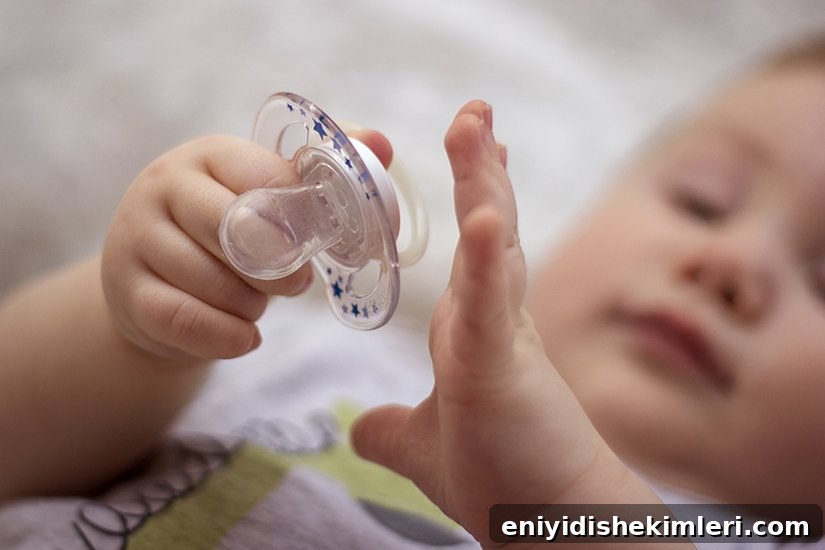
The debate over baby pacifiers has continued for years. Parents encounter opposing advice: pacifiers can soothe infants and even lower SIDS risk, yet prolonged use may harm oral development and complicate breastfeeding. As a dentist, I believe pacifiers can be helpful for both children and caregivers if used thoughtfully and at the right times.
Why Pacifiers Should Come with a Warning Label
Working as a dentist allows me to follow patients and their families over many years. Watching patients become parents highlights how anxious and cautious new caregivers can be. That concern often extends to everyday baby products we accept as normal—bottles, sippy cups and pacifiers. These items influence how a child’s mouth develops.
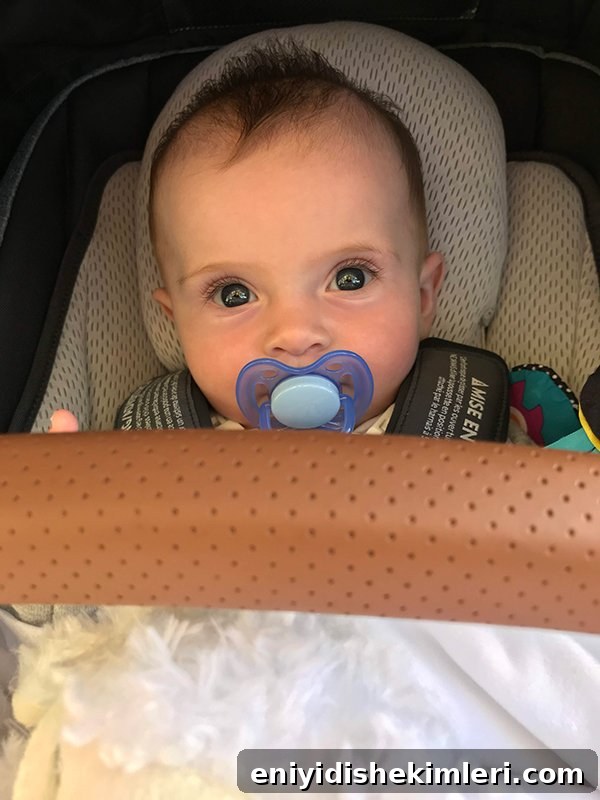
Over the past five decades clinicians have observed shifts in jaw, facial, and airway development. Poor oral development contributes to a rise in extractions and airway problems. In my practice I see narrower jaws and weaker profiles, changes that are partly linked to non-nutritive sucking habits like pacifier use. Similar concerns apply to sippy cups and other artificial feeding devices.
Pacifiers are associated with common dental problems and with underdeveloped mouths that can reduce airway size. Smaller airways raise the risk of sleep-disordered breathing, a condition that affects many people and has health consequences beyond crooked teeth. Understanding the trade-offs before introducing a pacifier helps parents weigh comfort and safety against long-term oral and airway development.
Below I examine the pros and cons of pacifier use, plus practical tips to minimize risks and choose appropriate options for your child. My goal is to help you feel informed and confident about whether—and how—to use a pacifier.
Big Picture: Should You Give Your Baby a Pacifier or Not
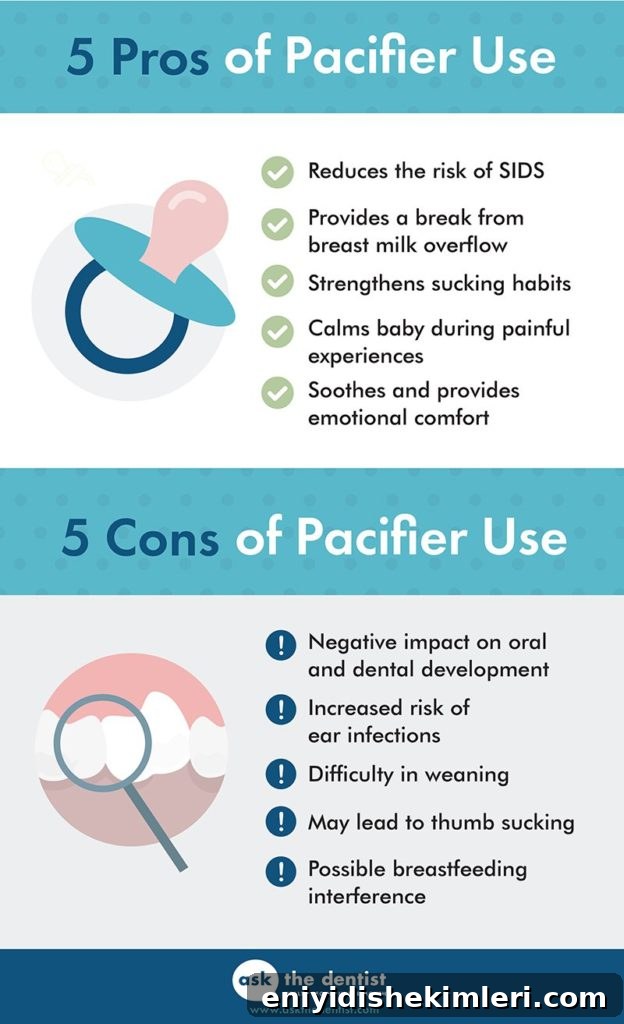
Ideally, avoiding pacifiers would eliminate a clear risk to a child’s orofacial development. Dentists emphasize this because changes to the palate, jaw and teeth can have lasting consequences. At the same time, pacifiers offer important benefits. Use in the first year has been linked to a large reduction in SIDS risk, and pacifiers can soothe infants, support non-nutritive sucking, and provide brief relief for tired caregivers.
For breastfeeding families, it’s important to delay pacifier introduction until a strong latch is established to reduce the chance of nipple confusion. Because SIDS risk decreases significantly after the first year, I recommend discontinuing pacifier use around your child’s first birthday if possible.
When Is It a Good Idea to Use a Pacifier?
Using a pacifier occasionally is reasonable. Appropriate situations include:
- After an effective breastfeeding latch is established and before 12 months, since pacifier use has been associated with reduced SIDS risk.
- When a breastfeeding parent is oversupplied and the baby is uncomfortable or spits up from rapid flow—offering a pacifier can give a brief break.
- When bottle-feeding to support non-nutritive sucking habits that can help the baby feed more effectively.
- During painful procedures such as a circumcision for additional soothing.
- In the NICU, where pacifiers provide comfort when skin-to-skin contact or other soothing is limited.
- When parents have tried other soothing strategies without success and the baby remains inconsolable.
If you introduce a pacifier, follow these guidelines:
- Offer it only between feedings, and never to delay a needed feeding.
- Don’t force it if the baby refuses.
- Keep pacifiers clean and avoid cleaning them in your own mouth.
- Choose pacifiers made from safe materials and the right size for your baby.
And try not to replace other soothing strategies with a pacifier unnecessarily. If a pacifier falls out while a baby sleeps, there’s usually no need to put it back in.
Negative Impact of Pacifiers
One common question is whether pacifiers make teeth crooked. The short answer is yes—prolonged pacifier use can significantly affect the development of teeth, jaws and facial structure. The longer the habit continues, the higher the risk of malocclusion and related problems.
Typical changes linked to pacifier use include:
- Anterior open bite—front teeth are pushed outward, creating a gap when the jaw closes.
- High, narrow palate—an elevated roof of the mouth that reduces airway size.
- Posterior crossbite—molar misalignment where top and bottom molars do not meet properly.
- Narrow maxillary arch—reduced width between upper molars.
These alterations can constrict the airway and increase the likelihood of sleep-disordered breathing. Poor sleep and disrupted restorative processes have wide-ranging implications, including daytime exhaustion, impaired concentration, mood disorders, metabolic disease and cardiovascular risk. As more children exposed to pacifiers have reached adulthood, clinicians have more evidence linking early oral development to later airway and sleep issues.
Other drawbacks include:
- Interference with breastfeeding—introducing a pacifier before breastfeeding is well established can lead to latch problems; delaying introduction helps reduce this risk.
- Higher ear infection risk—research shows increased otitis media risk that appears dose-dependent: more frequent pacifier use is associated with a higher risk.
The Emotional Impact of Pacifiers
Pacifiers soothe babies and can be a quick, effective tool for calming and helping infants fall asleep. They’re generally easier to wean than thumbsucking. However, emotional dependence can develop, and removing a pacifier later can be challenging and upsetting for a child.
Relying on a pacifier to blunt uncomfortable emotions may also reduce opportunities for children to learn coping skills. As children grow, parents should teach emotional regulation and offer alternative comforting strategies so the child learns healthy ways to handle worry, fear or sadness.
What’s the Best Pacifier on the Market?
If you choose to have a pacifier on hand, select one that minimizes potential harms. Look for well-designed, orthodontic-friendly options that fit your baby’s mouth and are made from safe materials.
Materials and design considerations:
- Pacifiers are commonly made from silicone, natural rubber (latex) or plastic. Ensure any plastic is BPA-free. Latex feels softer and more like a natural nipple but should be replaced frequently and avoided if there is a family history of latex allergy.
- One-piece pacifiers are preferable because they have fewer joints where bacteria can gather and are more hygienic.
- Avoid attaching strings or lanyards to the pacifier because they pose a strangulation risk.
- Make sure the pacifier fits your baby’s mouth; you may need to try several types to find the best fit.
Every baby has preferences, so choose a model your child accepts while keeping safety and hygiene in mind.
Reversing Pacifier Side Effects
If pacifier use has already affected your child’s oral development, there are corrective options. Early intervention produces the best results. Myofunctional therapy—exercises that retrain the muscles of the mouth and face—can improve tongue posture, swallowing patterns and oral function. An airway-focused dentist can assess palate shape, jaw relations and breathing and recommend appropriate therapies or referrals.
5 Tips for Breaking the Pacifier Habit
Most experts advise stopping pacifier use as early as is practical, ideally around the 12-month mark. Here are five practical strategies:
- Do it early—Stopping by about one year reduces the risk of long-term dental and airway changes.
- Go cold turkey if you can—Quitting abruptly can work for younger children, but only if you can stay consistent.
- Try gradual removal—Limit pacifier use to specific times and slowly reduce frequency if a rapid transition feels too difficult.
- Trade it in for a treat—For older toddlers, exchange the pacifier for a toy or comforting blanket as positive reinforcement.
- Frame it as “being a big kid”—Use positive language and role models to encourage the transition.
Avoid strategies that make the pacifier unpleasant (for example, adding an unpleasant taste). If you choose cold turkey, be prepared to stay firm; giving in after starting will prolong the process. Ensure all caregivers follow the same plan to increase success.

A Word of Caution: Avoiding Thumbsucking After Removing the Pacifier
When a pacifier is removed, some children may begin thumbsucking. Thumbsucking can be harder to eliminate because a parent cannot remove a thumb. If thumbsucking appears, consider reintroducing the pacifier briefly and then attempting removal again a bit later, or focus on substituting another comforting object. As children mature, non-nutritive sucking usually decreases on its own.
There is no single right approach for every family. Trust your instincts, follow the guidelines above, and consult your dentist or pediatrician if you see signs of altered oral development or breathing problems. With careful planning you can balance the short-term benefits of pacifiers against their potential long-term effects.
Do you have experiences with pacifiers and weaning? We’d love to hear what worked and didn’t work for you in the comments. Your experience might help another parent find the solution that is just right for them.
Dr. Mark Burhenne
resources
https://www.thoracic.org/patients/patient-resources/breathing-in-america/resources/chapter-23-sleep-disordered-breathing.pdf
https://www.ncbi.nlm.nih.gov/pubmed/17256438
https://www.ncbi.nlm.nih.gov/pmc/articles/PMC1325127/
https://www.ncbi.nlm.nih.gov/pmc/articles/PMC4462418/
http://pediatrics.aappublications.org/content/116/5/e716
https://www.ncbi.nlm.nih.gov/pubmedhealth/PMH0010837/
http://www.clevelandclinicmeded.com/medicalpubs/diseasemanagement/pulmonary/sleep-disordered-breathing/
https://www.nytimes.com/2014/06/22/magazine/who-made-that-pacifier.html
http://www.brianpalmerdds.com/pdf/Master_2_27_06.pdf
https://www.ncbi.nlm.nih.gov/pubmed/11979200
https://www.ncbi.nlm.nih.gov/pubmed/16389794
https://www.aafp.org/afp/2009/0415/p681.html