
One of the most debated topics for parents is how much fluoride children should be exposed to. Recent research has intensified that debate by suggesting a possible link between prenatal fluoride exposure and reduced IQ in children.
In 2017, a study published in Environmental Health Perspectives reported that higher maternal fluoride exposure during pregnancy was associated with lower IQ scores in their children later in life.
This finding adds to a body of research that raises questions about fluoride’s effects on brain development and cognitive function.
This article summarizes the main findings from that study and related research, and offers practical steps pregnant people and parents can consider if they want to reduce fluoride exposure.
New Findings on Prenatal Fluoride and IQ
A U.S. government-funded study released in September 2017 examined the relationship between maternal fluoride levels during pregnancy and child cognitive development. Investigators measured fluoride in the urine of pregnant participants, a reliable indicator of total fluoride intake, and later measured the children’s IQ at age four and again between ages six and 12.
Researchers reported that higher prenatal fluoride exposure was linked with significantly lower IQ scores in childhood.
The study accounted for multiple potential confounders, including socioeconomic status, maternal smoking, age, and marital status. While this is a well-controlled study, the authors and others emphasize that replication in other populations is important before drawing definitive conclusions.
Fluoride crosses the placenta, so maternal ingestion reaches the fetus. The study population in Mexico had fluoride exposure levels that, according to the authors, are likely comparable to levels found in many fluoridated water systems.
Do these results apply to the United States?
One difference is that fluoride in the Mexican groundwater studied was naturally occurring, whereas most U.S. municipal fluoration uses hydrofluorosilicic acid (HFS). HFS is the primary additive used in many U.S. water systems, and it can contain trace contaminants. Studies have also reported that certain water-treatment chemistries can increase lead leaching from older plumbing. These distinctions are relevant because composition and co-contaminants vary by source, but they do not change the core finding that fluoride itself crosses the placenta and can reach the developing fetus.
Other Research on Fluoride and IQ
Multiple studies and reviews have explored fluoride and cognitive outcomes. Key examples include the following.
Developmental Fluoride Neurotoxicity: A Systematic Review and Meta-Analysis
A 2012 systematic review and meta-analysis examined 27 studies through 2011 and reported a statistically significant association between higher fluoride exposure and lower IQ in children. On average, high fluoride exposure in those studies was associated with an IQ decrease of about seven points. The review authors noted limitations: many included studies came from areas with higher naturally occurring fluoride than typical U.S. community water fluoridation, and several studies had incomplete control for confounding variables.
Association of lifetime exposure to fluoride and cognitive functions in Chinese children: a pilot study
This small 2015 pilot study found that children with moderate to severe dental fluorosis had lower scores on culturally appropriate cognitive tests than children without fluorosis. The study’s sample size and higher fluoride concentrations in the study area limit generalizability, but the findings align with concerns raised in other research.
Effect of fluoridated water on intelligence in 10–12-year-old school children
A 2016 study in India reported that higher fluoride exposure correlated with lower IQ scores among schoolchildren. As with other studies, fluoride levels in the study areas often exceeded typical concentrations in the United States, making direct comparisons difficult.
Community Water Fluoridation and Intelligence: Prospective Study in New Zealand
This larger prospective study followed more than 1,000 people from childhood into adulthood and did not find a significant association between community water fluoridation and childhood IQ. Critics pointed out limitations: supplemental fluoride use in non-fluoridated communities was not fully accounted for, and several important covariates were not controlled. Differences in total fluoride exposure between groups may have been small, limiting the study’s ability to detect an effect.
Overall, the literature includes studies with varying results and quality. Some point to an association between higher fluoride exposure and lower cognitive outcomes, while others do not. Many experts call for more well-designed research that measures fluoride exposure directly (for example, via serial urine measurements) and controls comprehensively for socioeconomic, environmental, and maternal factors.
Does fluoride actually prevent cavities? Do children need it?
The answer depends on whether fluoride is applied topically or ingested. Topical fluoride — such as toothpaste and professional treatments — is effective at strengthening enamel and helping remineralize early decay. Toothpaste concentrations of fluoride are much higher than the trace amounts in water and act directly on tooth surfaces.
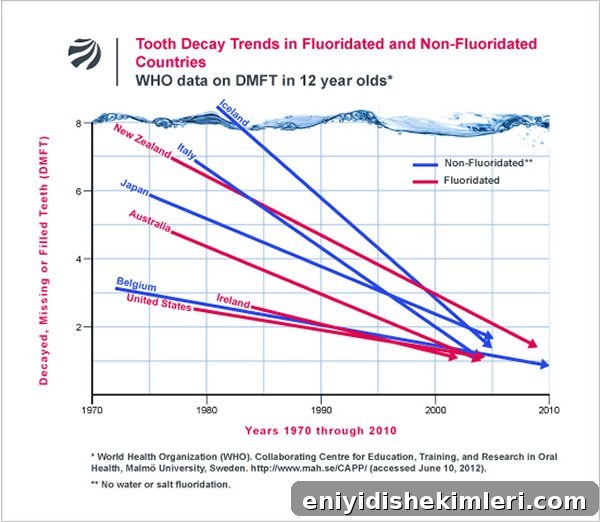
Whether ingested fluoride (for example, fluoridated drinking water) prevents cavities is debated. Major organizations like the ADA and CDC support community fluoridation as a public health measure to reduce dental caries. However, systematic reviews such as Cochrane’s have noted limitations in study designs and confounding societal changes that also reduce cavities, such as widespread toothpaste use, improved dental care access, and public health education.
Some studies show similar declines in cavities in both fluoridated and non-fluoridated communities, while others report modest increases in cavities after fluoridation cessation. The balance of benefits and risks — particularly for prenatal exposure and young children who receive other fluoride sources like formula made with fluoridated water — remains an active area of discussion.
Potential Risks and Considerations for Expectant Mothers
Fluoride crosses the placenta
Fluoride ingested by a pregnant person is transferred to the fetus, and it can cross the blood-brain barrier of the developing child.
Infant exposure from formula
Infant formula mixed with fluoridated water contains higher fluoride concentrations than breastmilk. This increases total fluoride exposure in early life for formula-fed infants.
Dental fluorosis
Excess fluoride intake in early childhood can cause dental fluorosis, a change in enamel appearance that is considered primarily cosmetic but signals elevated fluoride exposure during tooth development.
Practical Steps to Reduce Fluoride Exposure During Pregnancy
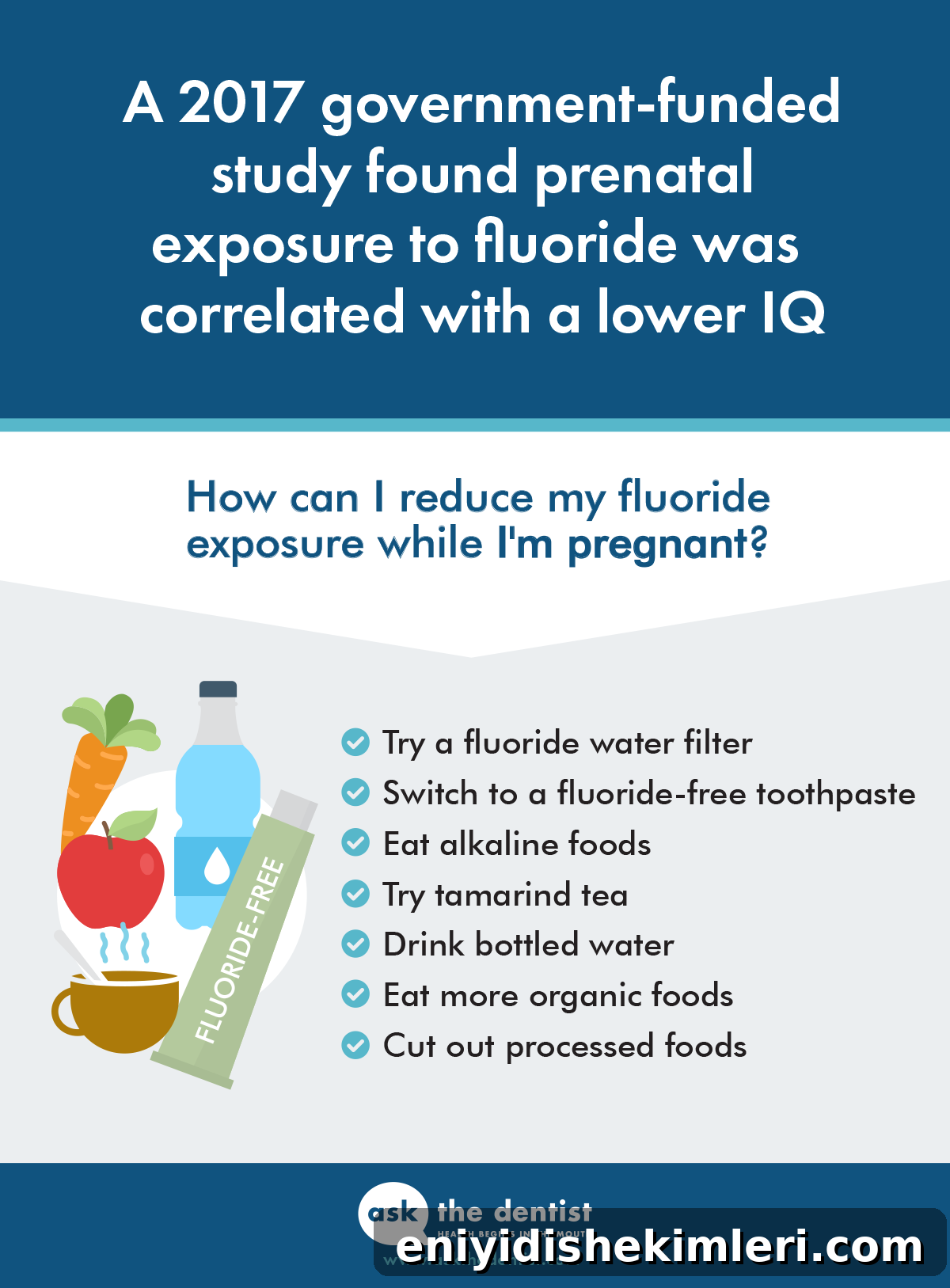
If you are pregnant or planning pregnancy and want to reduce fluoride exposure, consider these practical measures:
1. Switch toothpaste
Using a fluoride-free toothpaste can reduce daily fluoride intake from oral products. Some fluoride-free pastes use nano-hydroxyapatite as an alternative remineralizing agent.
2. Filter drinking water for fluoride
Not all home filters remove fluoride. Effective options include reverse osmosis systems and distillers, which reduce fluoride substantially. There are countertop and under-sink RO units as well as distillers that are more affordable than whole-house systems. Some pitcher filters claim fluoride removal, but many standard pitchers do not remove fluoride.
3. Make dietary and lifestyle swaps
- Choose bottled water if it is labeled fluoride-free, or use filtered water for preparing infant formula.
- Prioritize organic produce when possible to reduce pesticide-related fluoride exposure.
- Limit highly processed foods that may contain higher fluoride levels.
- Eat alkalizing, nutrient-rich foods and maintain a balanced diet, which may support natural excretion of toxins.
Some traditional remedies, like tamarind preparations, have been studied for possible effects on fluoride metabolism, but these are not widely established clinical recommendations.
Final Thoughts
A growing number of studies suggest fluoride exposure, particularly during prenatal development, may affect childhood cognitive outcomes. The most robust recent study found an association between maternal fluoride levels and lower IQ in children, though further research is needed to confirm causality and clarify safe exposure thresholds.
Topical fluoride applied directly to teeth has clear benefits for cavity prevention, while the benefits of ingested fluoride are more contested in the context of widespread topical fluoride availability and other public health improvements. If you are pregnant or trying to conceive and concerned about fluoride, practical steps like switching to fluoride-free toothpaste, using effective water filtration, and making dietary adjustments can reduce exposure.
Decisions about fluoride involve weighing potential risks and benefits. Many parents opt to minimize prenatal and early-life fluoride exposure while continuing standard oral hygiene practices that protect teeth. If you have specific health concerns, consult a healthcare professional for personalized guidance.
References
- Bashash, M., Thomas, D., Hu, H., Martinez-Mier, E. A., Sanchez, B. N., Basu, N., … & Liu, Y. (2017). Prenatal fluoride exposure and cognitive outcomes in children at 4 and 6–12 years of age in Mexico. Environmental Health Perspectives, 125(9).
- Reddy, P. Y., Reddy, K. P., & Kumar, K. P. (2011). Neurodegenerative changes in different regions of brain, spinal cord and sciatic nerve of rats treated with sodium fluoride. Journal of Medical & Allied Sciences, 1(1), 30.
- Hirzy, William. (2013). Citizens Petition in re: Use of Hydrofluosilicic Acid in Drinking Water Systems of the United States.
- Maas, R. P., Patch, S. C., Christian, A. M., & Coplan, M. J. (2007). Effects of fluoridation and disinfection agent combinations on lead leaching from leaded-brass parts. Neurotoxicology, 28(5), 1023-1031.
- Environmental Protection Agency (EPA). (2001). Technical fact sheet: final rule for arsenic in drinking water.
- World Health Organization (WHO). (2018). Lead poisoning and health.
- Choi, A. L., Sun, G., Zhang, Y., & Grandjean, P. (2012). Developmental fluoride neurotoxicity: a systematic review and meta-analysis. Environmental Health Perspectives, 120(10), 1362-1368.
- Choi, A. L., Zhang, Y., Sun, G., Bellinger, D. C., Wang, K., Yang, X. J., … & Grandjean, P. (2015). Association of lifetime exposure to fluoride and cognitive functions in Chinese children: a pilot study. Neurotoxicology and Teratology, 47, 96-101.
- Aravind, A., Dhanya, R. S., Narayan, A., Sam, G., Adarsh, V. J., & Kiran, M. (2016). Effect of fluoridated water on intelligence in 10–12-year-old school children. Journal of International Society of Preventive & Community Dentistry, 6(Suppl 3), S237.
- Broadbent, J. M., Thomson, W. M., Ramrakha, S., Moffitt, T. E., Zeng, J., Foster Page, L. A., & Poulton, R. (2015). Community water fluoridation and intelligence: prospective study in New Zealand. American Journal of Public Health, 105(1), 72-76.
- Osmunson, B., Limeback, H., Neurath, C., Broadbent, J. M., Thomson, W. M., Moffitt, T. E., & Poulton, R. (2016). Study incapable of detecting IQ loss from fluoride/Broadbent et al. respond. American Journal of Public Health, 106(2), 212.
- Iheozor-Ejiofor, Z., Worthington, H. V., Walsh, T., O’Malley, L., Clarkson, J. E., Macey, R., … & Glenny, A. M. (2015). Water fluoridation for the prevention of dental caries. Cochrane Database of Systematic Reviews, (6).
- Hujoel, P. P., Hujoel, M. L. A., & Kotsakis, G. A. (2018). Personal oral hygiene and dental caries: A systematic review of randomized controlled trials.
- Meyer, J., Margaritis, V., & Mendelsohn, A. (2018). Consequences of community water fluoridation cessation for Medicaid-eligible children and adolescents in Juneau, Alaska. BMC Oral Health, 18(1), 215.
- Tschoppe, P., Zandim, D. L., Martus, P., & Kielbassa, A. M. (2011). Enamel and dentine remineralization by nano-hydroxyapatite toothpastes. Journal of Dentistry, 39(6), 430-437.
- Vano, M., Derchi, G., Barone, A., & Covani, U. (2014). Effectiveness of nano-hydroxyapatite toothpaste in reducing dentin hypersensitivity: a double-blind randomized controlled trial. Quintessence International, 45(8).
- Vasant, R. A., & Narasimhacharya, A. V. R. L. (2012). Ameliorative effect of tamarind leaf on fluoride-induced metabolic alterations. Environmental Health and Preventive Medicine, 17(6), 484.