
Tooth extraction is a dental procedure in which a tooth is removed from its socket in the jawbone.
Extractions are recommended for teeth that are severely decayed, broken, impacted (such as some wisdom teeth), or otherwise unrestorable. In many cases, deep cavities can be restored; only teeth that cannot be saved are candidates for removal.
There are two main approaches: a simple extraction for teeth that are visible and accessible, and a surgical extraction for partially erupted, impacted, or otherwise complicated cases. Surgical extractions are more invasive, typically cost more, and require a longer recovery period.
In the United States, the cost of a tooth extraction typically ranges from $140 to $450 per tooth. Simple extractions average around $187 per tooth, while surgical extractions average about $400. Wisdom tooth removal for all four teeth, including anesthesia, x-rays, and exams, averages near $1,900. If you plan a dental implant later, a bone graft may be recommended at the time of extraction; graft costs vary widely depending on the material used.
Simple vs. Surgical Tooth Extraction
A simple extraction is a common, routine procedure performed under local anesthesia. Most general dentists perform these, and recovery is usually quicker with less swelling and discomfort.
Surgical extraction is more invasive and may require an oral surgeon. It involves incisions, possible removal of bone, and suturing. Recovery tends to be longer and more involved.
Dentists decide between simple and surgical extraction based on factors such as:
- Visibility of the tooth
- Impaction, especially with wisdom teeth
- Root shape and position
Why a Tooth Might Be Pulled
Common reasons for extraction include:
- Large cavities: Extensive decay that causes irreversible infection of the tooth pulp may require extraction if a root canal is not an option.
- Wisdom teeth: Third molars can erupt incorrectly, crowd adjacent teeth, become infected, or be impacted and often require removal, usually between ages 17–25.
- Cracked or broken teeth: Severe fractures may not be repairable and removal is recommended.
- Advanced periodontal disease: Severe gum disease can loosen teeth that may need extraction to prevent ongoing problems.
- Overcrowding or orthodontic needs: Extracting a tooth can create space for proper alignment during orthodontic treatment.
- Supernumerary tooth issues: Extra baby or permanent teeth that block eruption of others may be removed.
- Infection: When infection has spread beyond what root canal therapy can treat, extraction may be necessary.
- Compromised immunity: Patients with weakened immune systems may be at higher risk from infected teeth and sometimes require extractions.
Costs
As noted, expect typical U.S. costs of $140–$450 per tooth. Simple extractions average about $187; surgical extractions about $400. Wisdom tooth removal for all four can average around $1,900. Bone grafts, when indicated, add additional cost depending on material and extent.
Preparing for a Tooth Extraction
Before extraction, your dentist will review your medical history and medications. It is important to disclose drugs that affect bone metabolism or bleeding risk, including bisphosphonates, denosumab, anticoagulants, steroids, and immune-suppressing medications. Your clinician will also consider medical conditions such as heart disease, osteoporosis, bleeding disorders, diabetes, liver or kidney disease, thyroid disorders, immune compromise, or a history of bacterial endocarditis.
On the day of the procedure:
- Wear short sleeves if you expect IV sedation so the clinician can access your veins.
- Fast for 6–8 hours before IV sedation.
- Arrange a ride home if you will receive moderate or deep sedation.
- Avoid smoking, as it increases complication risk.
- If you have a cold, nausea, or vomiting in the week before surgery, inform your dentist — anesthesia plans may change or the procedure may be rescheduled.
Anesthesia Options
Simple extractions usually require only local anesthetic. Nitrous oxide is an option for mild sedation and wears off quickly. Surgical extractions may use mild sedation (nitrous oxide or oral sedative), moderate sedation (oral or IV sedatives), or deep IV sedation/general anesthesia administered by a qualified provider. Moderate and deep sedation require a ride home.
What to Expect During the Procedure
Before the Procedure
Your dentist will perform an exam and take x-rays to evaluate the tooth, surrounding bone, and nearby nerves. Based on findings and your health history, antibiotics may be prescribed preoperatively in selected cases.
During the Procedure
You should feel pressure but not sharp pain during extraction. Tell your dentist immediately if you feel pain beyond pressure.
Simple Extraction
- Local anesthetic is applied.
- An elevator loosens the tooth.
- Forceps remove the tooth once loosened.
- Bone may be smoothed and the socket cleaned.
- If an implant is planned, a bone graft can be placed.
- The socket is rinsed and a gauze pad placed to control bleeding.
Surgical Extraction
- Local anesthetic and, if needed, IV sedation are administered.
- An incision is made in the gum to access the tooth.
- Bone may be removed to expose the tooth, which is then elevated and extracted.
- The socket is cleaned, sutured closed, and sometimes IV steroids are given to reduce swelling.
After the Procedure
Local anesthesia typically wears off in 60–90 minutes, after which you may experience discomfort and swelling, especially after surgical extraction. Most bleeding subsides within four hours. Your provider will give written aftercare instructions — follow them closely to promote healing and avoid complications like dry socket.
A gauze pad will be placed over the socket; bite down gently and avoid chewing on the gauze. Replace the gauze if it becomes saturated. If you received moderate or deep sedation, expect possible nausea or other anesthesia aftereffects for up to 12 hours.
Pain Management
Over-the-counter anti-inflammatory medications such as ibuprofen are generally effective for post-extraction pain and swelling. Avoid aspirin because it can increase bleeding. For more severe pain after surgical extraction, a short course of prescription opioids may be provided; use the lowest effective dose for the shortest necessary time and safely dispose of unused medication.
400–800 mg of ibuprofen is often recommended in dental settings to control pain and inflammation, but any higher dosing should follow your dentist’s or physician’s guidance due to bleeding and other risks.
Aftercare Tips
Follow your dentist’s instructions. General measures to promote recovery include:
- Keep your head elevated: Use extra pillows for 2–3 days to reduce throbbing and swelling.
- Use a tea bag: A damp black tea bag applied to the socket can help clotting.
- Ice your jaw: Apply an ice pack 20 minutes on, 20 minutes off for the first 36 hours after surgical extractions.
- Avoid sucking or vigorous rinsing: Don’t use straws, spit forcefully, or perform actions that could dislodge the clot.
- Rinse with salt water: After 24 hours, gently rinse with warm salt water to keep the area clean.
- Don’t smoke: Smoking delays healing and increases complication risk.
- Avoid touching the site: Refrain from poking the socket with your tongue or fingers.
- Eat soft foods for 2–3 days: Choose nourishing, nonirritating foods and avoid very sugary items that can impede healing.
Recovery Timeline
Simple extraction recovery is usually 2–3 days for most activities, with full healing of the socket in about 14–21 days. Surgical extraction recovery often takes 7–10 days for routine activities, while complete bone healing can take several months.
Possible Complications
Complications are uncommon but can occur, especially after surgical or wisdom tooth extractions. Risk factors include poor oral hygiene, certain medications or medical conditions, the use of a surgical drill, and the surgeon’s experience. Potential complications include:
- Dry socket, a painful loss of the clot early in healing
- Jaw or TMJ soreness
- Damage to nearby teeth or dental work
- Infection at the extraction site
- Sinus communication for upper back teeth (usually heals on its own)
- Numbness or altered sensation if a nerve is irritated (usually temporary, rarely permanent)
- Retained root fragments if removal poses higher risk
- Rare jaw fracture in weakened bone
- Shifting of adjacent teeth if the space is not restored
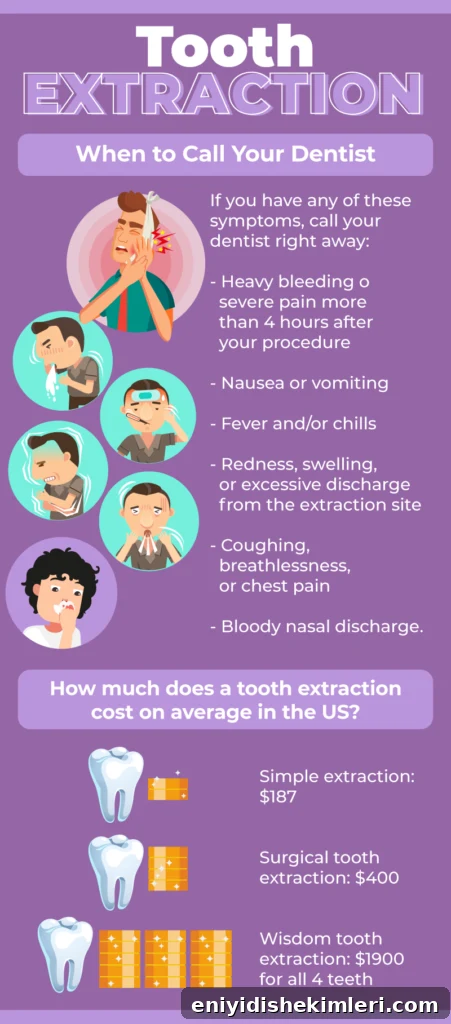
When to Contact Your Dentist
Contact your dentist if you have:
- Heavy bleeding or severe pain lasting more than four hours
- Nausea or vomiting
- Fever or chills
- Increasing redness, swelling, or pus at the site
- Persistent or excessive bleeding from the socket
- Difficulty breathing, chest pain, or other signs of systemic distress
- Bloody nasal discharge after an upper tooth extraction
Extraction vs. Root Canal vs. Fillings
When deciding among extraction, root canal, or restorative options, discuss benefits and risks with your dentist. Teeth with reversible pulpitis can often be restored with fillings and crowns. Once irreversible pulpitis occurs, a root canal or extraction with replacement (implant or bridge) are the primary options. Root canals preserve the natural tooth and, when successful, can be less costly over time than extraction followed by an implant.
Avoiding unnecessary extractions is generally advised; extractions can have long-term consequences for chewing, jawbone health, and adjacent teeth unless the space is restored.
Orthodontic and Restorative Options After Extraction
To prevent shifting and bite problems, common options after extraction include:
- Dental implants: Replace the extracted tooth with an implant-supported crown; the process takes several months and cost varies.
- Bridges: Use adjacent teeth or implants to support crowns that fill the gap.
- Braces or orthodontics: Realign teeth to address spacing or bite issues after extraction.
Bone Grafting
If you plan to replace the tooth with an implant or bridge, consider a bone graft at the time of extraction to preserve the alveolar ridge. Grafting material (autograft, xenograft, or synthetic) helps maintain bone volume and makes future implant placement more predictable. Bone grafting increases up-front cost but often reduces complications and added expense later. Grafting is generally not necessary for routine baby tooth extractions.
FAQs
How many teeth can be extracted at once? There is no strict limit; many dentists perform multiple extractions at once to limit the number of procedures and overall healing time. Avoid removing opposing teeth simultaneously when possible, except for wisdom teeth where removal of multiple teeth at once is common.
Is tooth extraction painful? With proper anesthesia, extraction should not be painful during the procedure — you should feel pressure only. Postoperative discomfort is expected but manageable with medication and proper care.
Is bleeding normal after extraction? Some bleeding is normal for up to four hours after extraction. Excessive bleeding after that time warrants contacting your dentist.
Who performs extractions? General dentists perform most extractions. Oral and maxillofacial surgeons handle more complex cases, impacted teeth, and patients referred for surgical expertise.
Is my tooth pain a dental emergency? Tooth pain accompanied by severe swelling, fever, or uncontrolled bleeding may indicate a serious infection or abscess and should prompt immediate contact with your dentist or emergency care provider.