When I was younger, longevity meant adding years.
Today, it means adding life to those years.
This month I turned 66. Rather than slow down, I’m doubling down—on my health, my energy, and my strength.
My wife and I still ski. We mountain bike. We chase our grandkids around the house. I’m not aiming merely to survive into my 90s—I want to thrive when I get there.
I’ve seen the other side. Both my parents had Alzheimer’s. My in-laws lived into their 90s, but they were frail, dependent, and barely able to move. That’s not aging—that’s slow dying.
My goal is simple: square the life curve. I want to feel healthier in my 60s than I did in my 30s.
Longevity Science in 9 Quick Hits
- Heart risk rises when gums bleed.
Multiple reviews show periodontitis increases cardiovascular disease risk by roughly 19–36% depending on severity. - Tooth loss shortens healthy brain years.
A 2024 meta-analysis links poor periodontal health to a significantly higher chance of cognitive impairment. - More teeth, more healthy years.
Adults with 20 or more teeth at 70 enjoy longer disability‑free life expectancy than those with fewer. - Treating gums lowers inflammation.
Intensive periodontal therapy reduces markers like CRP and TNF‑α for months in people with metabolic syndrome. - Pregnancy outcomes depend on maternal oral health.
Periodontitis is associated with higher risks of pre‑eclampsia and low birth weight. - Blood‑pressure support begins in the mouth.
Nitrate‑reducing oral bacteria help restore nitric oxide when the body’s own production falls with age, supporting vascular health. - Sleep apnea affects cognition, especially in women.
Large cohort data link obstructive sleep apnea with a modestly higher dementia incidence by age 80; airway shape, tongue posture, and oral inflammation influence risk. - Poor oral hygiene associates with higher all‑cause mortality.
Population studies show tooth loss correlates with a steeper drop in survival. - The mainstream press is catching up.
Coverage increasingly recognizes the oral microbiome as an important contributor to long-term health.
What Does It Mean to Square the Life Curve?
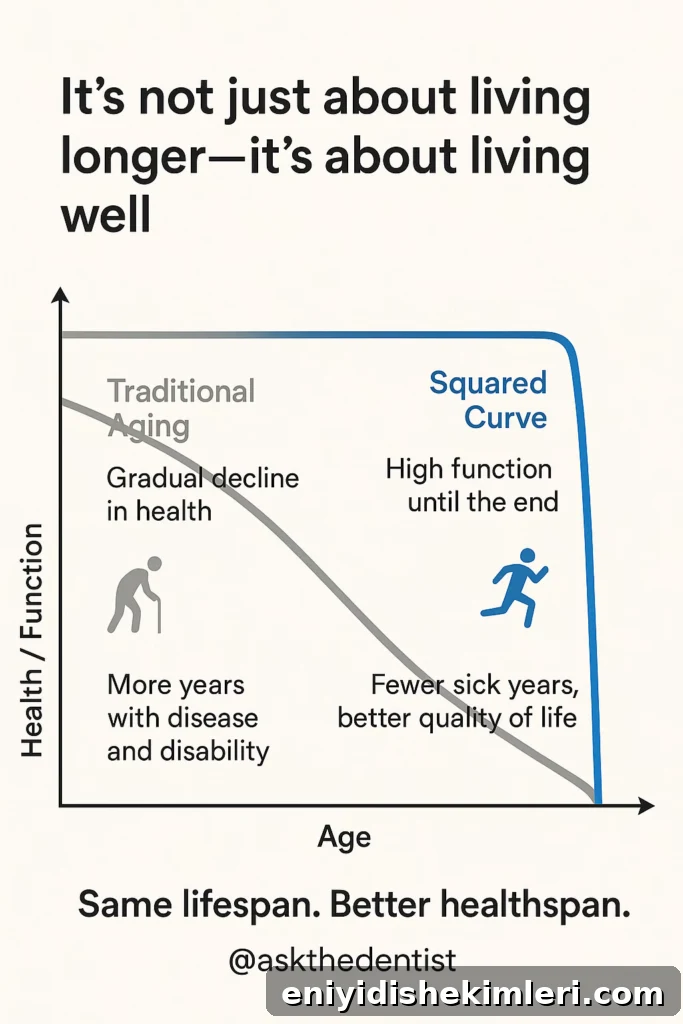
“Squaring the curve” isn’t just about living longer—it’s about staying healthy until the very end.
Instead of a prolonged decline into disease and disability, the goal is to compress illness into the shortest possible window before death. Picture a health-over-time graph that stays high and stable for decades, then drops quickly at the end. The aim is not merely to add years to life but to add life to those years.
After all, what’s the point of extra years if they aren’t lived well?
Too many people experience a slow, steady loss of muscle, energy, and mental clarity—more medications, more falls, less independence. It doesn’t have to be that way.
When you square the life curve, you remain sharp and mobile until late in life. You extend healthspan, not just lifespan.
The brain changes that lead to Alzheimer’s at 75 often begin decades earlier. The strength needed to get off the floor at 85 is built—or lost—today.
Here’s what I’m doing now to stay in the “square.”
1. I Prioritize My Mitochondria—Because They Are the Aging Clock
When mitochondria falter, organs and tissues follow. Protecting cellular energy supports brain, heart, immune function, and yes, oral health.
My current protocol includes:
- C15:0 (pentadecanoic acid): an odd‑chain saturated fat that supports mitochondrial function and reduces inflammation.
- CoQ10: essential for cellular energy and especially important for people on statins.
- Magnesium: supports energy production, cognitive function, and deep sleep.
2. I Protect My Brain—Starting With My Mouth
Having watched Alzheimer’s in my family, I’ve spent decades connecting oral health to brain health. The gums and oral tissues influence systemic inflammation and bloodstream exposure to microbes and toxins.
Daily practices I follow:
- Prioritize nasal breathing for deeper sleep.
- Track and optimize sleep regularly.
- Keep inflammation low through consistent oral care, a clean diet, and regular movement.
- Treat my gums with the same seriousness I treat my brain health.
3. I Train for the Life I Want at 85
I lift not just to look fit but to ensure I can ski, bike, play with grandkids, and recover from falls. Strength preserves independence.
My weekly routine:
- Resistance training three times per week.
- Walk 10,000+ steps most days.
- Consume 30–40 grams of protein per meal.
- Practice Pilates once weekly for mobility and core strength.
Falls are a leading cause of fatal injury in older adults—strength is practical longevity insurance.
4. I Take Oral Health More Seriously Than Ever
Oral health is one of the most overlooked drivers of aging-related disease.
Poor oral health contributes to:
- Cardiovascular disease
- Neurodegeneration
- Adverse pregnancy outcomes
- Systemic inflammation
My daily non‑negotiables include:
- Consistent interdental cleaning.
- Using toothpaste that supports the oral microbiome and enamel remineralization.
- Tongue scraping and avoiding harsh mouthwashes that disrupt beneficial oral bacteria.
Aging Well Is a Choice You Make Now
You don’t need to do everything, but you do need to start. Each choice either builds capacity for strength, memory, and independence or sets you up for a slow decline.
I’m not trying to live forever. I want to live well for as long as I can—and I want the same for you.
– Dr. Mark Burhenne

P.S. Are you actively building healthspan or just hoping for the best? Hit reply—I’d love to hear how you’re planning for 80+.