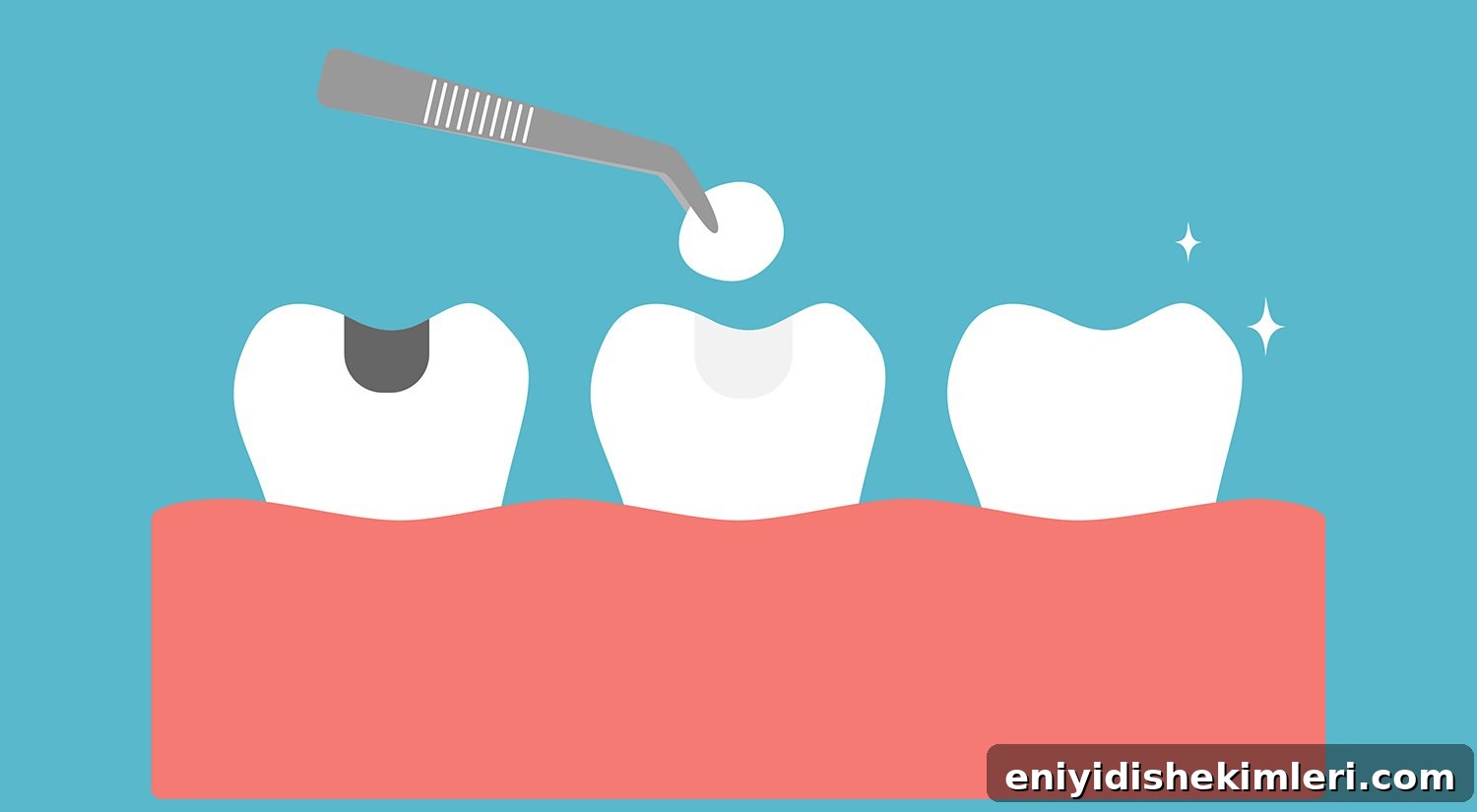
For a small-to-medium cavity that requires care, your dentist will often recommend a dental filling. This generally painless treatment preserves healthy tooth structure while removing decay.
Common questions about fillings include:
- How do I know if I need a filling?
- Should I have amalgam (silver) fillings removed?
- Does it hurt to get a filling?
- How many visits are required for a filling?
Don’t worry — getting or replacing fillings is usually a very low-pain procedure. There is a lot of confusing information online about filling materials and techniques. Below is a clear, practical guide so you can go into your next appointment informed and confident.
What is a dental filling?
A dental filling restores a portion of a tooth damaged by decay. The goal is to remove the decayed material, clean the area thoroughly, and fill the space with a suitable material so the tooth returns to normal shape and function.
Common filling materials include amalgam (silver-colored), composite (tooth-colored resin), porcelain (ceramic), and gold. Some porcelain restorations can be completed quickly with modern milling techniques.
How does my dentist determine I need a filling?
Typical signs of a cavity are pain or sensitivity in a tooth, or food suddenly catching between teeth. If hot or cold foods or drinks cause sharp or tingling discomfort, contact your dentist. Because pain often indicates a more advanced cavity, prompt evaluation is important.
At the appointment, the dentist uses several methods:
Visual assessment: The dentist examines the mouth for obvious signs of decay such as cracks, discoloration, white spots, or rough areas on the tooth surface.
Probing/palpation: A small instrument may be used to gently probe suspicious areas. Different textures and sounds from the instrument can help identify the extent of decay. This technique is useful for top-surface (occlusal) decay but cannot detect decay between teeth.
X-rays: Dental x-rays provide a deeper view and are often taken to confirm the presence, size, and severity of cavities. X-rays help decide whether a filling is sufficient or if more extensive treatment, like a root canal, is needed.
Diagnosis and treatment planning: After assessment and imaging, your dentist will explain findings and options. Very early enamel lesions sometimes respond to remineralization strategies and dietary changes. If the cavity is larger or in a hard-to-clean location, a filling is usually recommended.
Types of dental fillings: which should I choose?
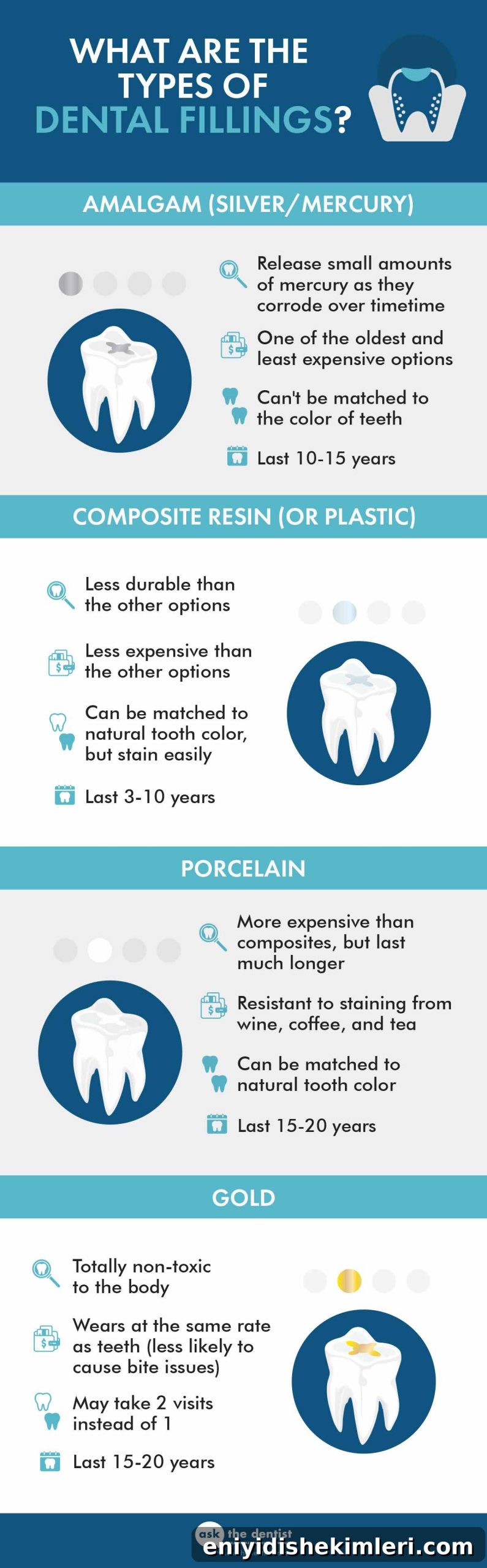
Amalgam (silver): Amalgam has been used for well over a century and is durable and economical. It corrodes over time and darkens in color. Two main concerns with amalgam are that preparing some metal restorations can require removing healthy tooth structure, and amalgam contains elemental mercury mixed with other metals. While many authorities consider it safe, some patients and clinicians prefer to avoid it when alternatives are available. Amalgam fillings typically last about 10–15 years.
Composite resin (tooth-colored): Composites are made of glass and acrylic resin and can be matched to your tooth color, making them ideal for visible teeth. They are more conservative of tooth structure but are generally less durable than metal, often lasting 3–10 years depending on location and care. Composites can stain over time, though newer materials resist staining better.
Porcelain (ceramic): Porcelain inlays, onlays, or onlay-type restorations are color-matched and highly resistant to staining. They often require two visits if sent to a lab, though chairside milling systems can sometimes complete the restoration in one visit. Porcelain restorations are bonded to the tooth and typically last 10–15 years.
Gold inlay/onlay: Gold restorations are extremely durable and compatible with oral tissues. They wear similarly to natural teeth and can last decades—often 40 years or more. Gold restorations require two visits because they are cast from impressions and tend to be the most expensive up front, but they are long-lasting and reliable.
What to expect when you get a dental filling
Here’s a typical sequence:
Numbing: A local anesthetic is injected to numb the area. Waiting a few minutes lets the anesthetic take effect. The injection is usually the most uncomfortable part of the visit.
Decay or old filling removal: With the area numb, the dentist removes decay or an existing filling using dental handpieces. Thorough cleaning of the cavity is essential, especially when replacing an old restoration.
Preparation and insertion: The restoration is shaped to fit the cleaned area. For composites, only the decayed portion is removed and the tooth is conditioned with etch, primer, and bonding agent before the material is placed. Matrix bands are used when the cavity touches neighboring teeth so the restored surfaces remain separated for proper flossing. Composite materials are light-cured with a special lamp to harden them.
For lab-fabricated restorations like porcelain or gold, impressions are taken and a temporary restoration may be placed until the final piece is cemented at a second visit.
Polishing and bite check: After the filling is placed and set, the dentist polishes the surface and checks your bite to ensure the restoration does not interfere with chewing. If the bite is high, adjustments are made to prevent discomfort or jaw issues.
How long do fillings last?
Longevity varies by material and oral care:
- Amalgam: typically 10–15 years, sometimes longer
- Composite resin: generally 3–10 years, occasionally much longer
- Porcelain: about 10–15 years
- Gold inlay/onlay: often 40–60 years
Factors that affect lifespan include oral hygiene, diet, bruxism (teeth grinding), and the size and location of the restoration. Regular dental checkups allow your dentist to monitor restorations and recommend replacement when needed.
What to do about existing amalgam fillings
Amalgam contains mercury, and while it has a long history of use and many people have no issues, some individuals experience sensitivity or prefer to avoid mercury-containing materials. Removing amalgam can temporarily increase mercury exposure if not done with proper precautions, so removal should be considered carefully and performed by a dentist experienced in safe removal techniques.
If cost or availability is a concern and your dentist only offers amalgam, consider seeking another provider or visiting a dental school, where supervised care is offered at reduced cost.
Frequently asked questions
Q
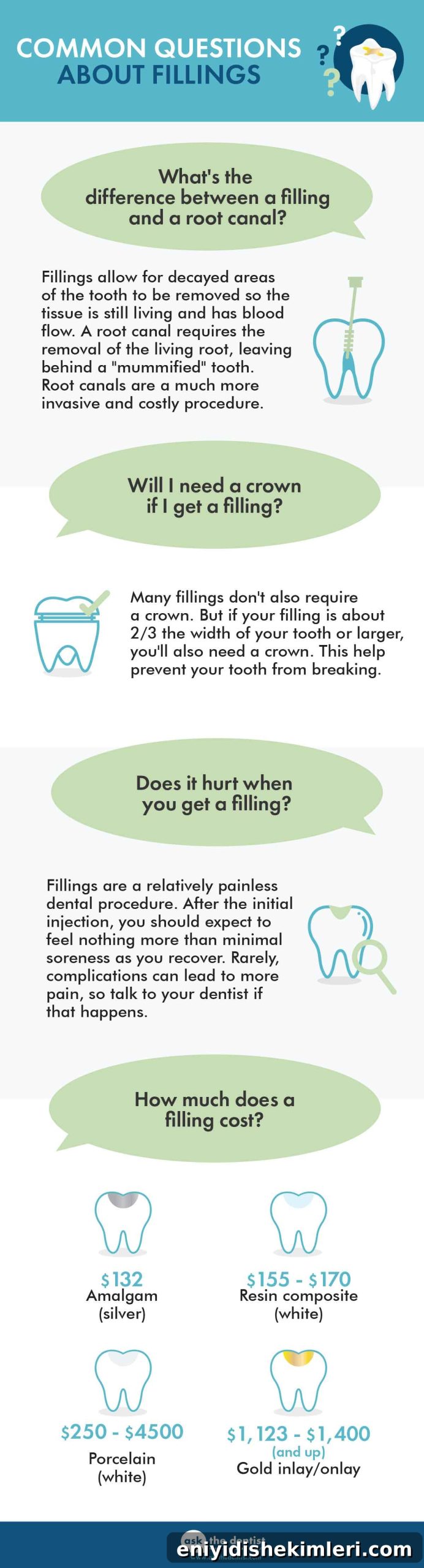
What’s the difference between a filling and a root canal?
A
A filling restores a portion of the living tooth after decay is removed. The tooth’s pulp and blood supply remain intact. A root canal is needed when decay or infection reaches the pulp; the pulp is removed, the root canals are cleaned and filled, and a crown is typically placed to protect the tooth. A root canal-treated tooth no longer has living pulp and is more brittle, so further restoration is usually required.
Q
Will I ever need a filling with a crown?
A
If a cavity or previous restoration removes more than about two-thirds of the tooth width, a crown is often recommended to protect the remaining tooth. Crowns cover and strengthen teeth that are structurally compromised.
Q
Does getting a filling hurt?
A
Most patients report little to no pain during a filling when local anesthesia is effective. Rare complications that can cause discomfort include poorly placed anesthesia, soft tissue irritation, overheating or drying of the tooth during drilling, and jaw soreness from keeping the mouth open. These are uncommon and usually manageable.
Q
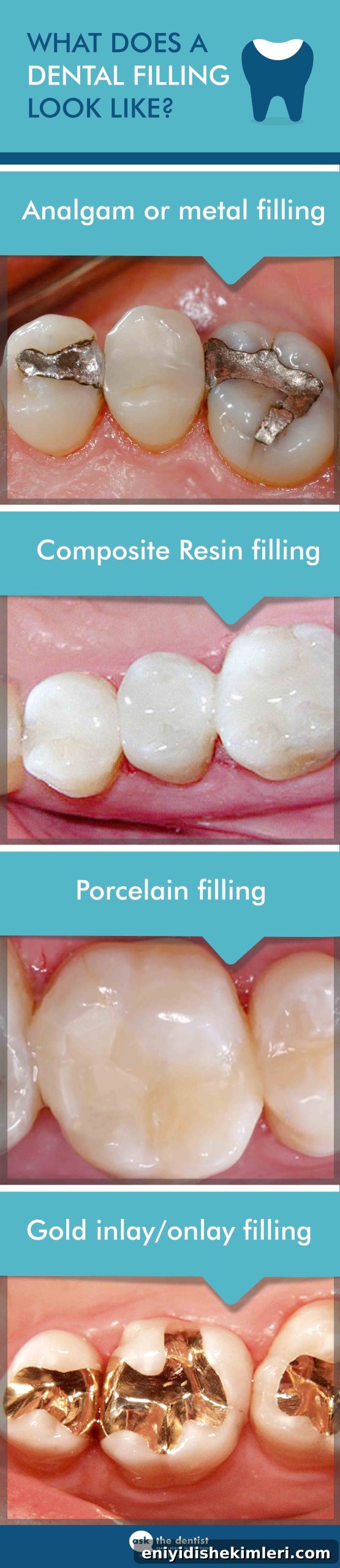
What does a filling look like?
A
A properly finished filling should blend with the tooth contours and restore your original bite. Tooth-colored composites and porcelain aim to match natural tooth shade, while gold or amalgam will be visibly different but functional. A correct fit and bite alignment are essential to avoid future problems.
Q
How much does a filling cost?
A
Costs vary by material and location. Typical ranges are lower for amalgam and composite and higher for porcelain and gold. Prices depend on where you live and the tooth’s location. If cost is a concern, dental schools often provide quality care at reduced fees.
Q
Does a filling prevent future cavities in that tooth?
A
Fillings restore the damaged area, but no restoration is permanent. Metal fillings corrode in a way that can help seal gaps and resist recurrent decay, while bonded composites rely on a seal that can degrade over time. Good oral hygiene and regular dental checkups help prevent recurrent decay around restorations.
Key takeaways
Don’t ignore sharp or throbbing tooth pain — early treatment prevents more extensive procedures. Understand your material and treatment options and ask questions before proceeding. Most fillings are almost pain-free aside from the initial anesthetic injection. If you have concerns about materials, costs, or technique, discuss them with your dentist or consider seeking a second opinion.